College of Liberal Arts
March 26, 2026 2026-08-03 6:51College of Liberal Arts

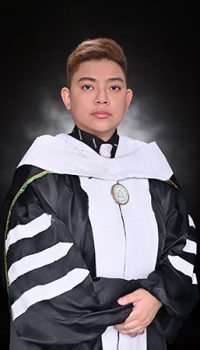
MARIA ELIZABETH D. BORCES
Dean, College of Liberal Arts
Program Recognition
ACSCU-ACI - LEVEL IV RE-ACCREDITED
About
The College of Liberal Arts of the University of Manila was opened in the school year 1920-1921. It teaches not only the principally courses traditionally embraced by the humanities and social sciences but also trains the students in the skills of a liberal education: learning, reading and writing, and thinking critically in the broad fields of liberal learning- the arts, science, society, philosophy, and religion.
It specifically, through a balanced curriculum and a varied but unified program of extra-curricular activities, it aims: to train students in correct and creative thinking, judicious appraisal of contemporary problems, effective communication and aesthetic as well as ethical discrimination of values; to give a wide and intensive cultural background preparatory to later professional training in Law, Education, Foreign Service, Business Administration, Public Administration, Military Science or in any other field; to acquaint the students with the significant facts, basic and unifying principles as well as the chief methods of research in the four major areas of human knowledge, namely, the Natural and Social Sciences, Mathematics and the Humanities (with Philosophy, the integrating master science, included); and to interest students in the study of research possibilities that are relevant to conditions prevailing in our country.
On August 3, 2003, the University created history once more, as it received a government permit to offer a four-year Bachelor of Arts in Cultural Languages major in Japanese Language, making the University of Manila the very first institution of higher learning to offer a degree program in Japanese Language.
Objectives
General Objectives:
The University of Manila College of Liberal Arts aims to provide a preparation for life that is full of meaning and purpose, rich, productive and serviceable through academic programs that are geared towards the total formation of every learner guided by the 3 UM Ideals: Love of Country (Patria), Love of Science (Scientia), and Love of Virtue (Virtus).
Specific Objectives:
- To provide a broad, solid and integrated general education which equips students with intellectual skills, knowledge, attitudes and habits necessary for them to become caring, productive and enlightened citizens in a democratic society.
- To develop professionally trained and competent men and women with a solid foundation in the Arts and Sciences; equipped with an inquiring mind, well-trained faculty members who are proficient in the scientific, mathematical, social, and logical thinking and philosophical skills to enable them to address the pressing need of the country in science and technology.
- To train students in correct and creative thinking, judicious appraisal of contemporary problems, effective communication and aesthetic, as well as, ethical inculcation of values;
- To provide students with an in-depth and intensive socio-cultural background in order to widen the horizon of future professionals in the field of Law, Education, Business Administration, Public Administration, Criminology and other disciplines.
- To empower students with the significant facts, basic unifying principles, as well as, the various methods, processes and techniques of research in the four major areas of human knowledge, namely: Natural Science, Social Science, Mathematics, Humanities and Philosophy.
Program Intended Learning Outcomes
Upon successful completion of a bachelor’s degree program under the College of Liberal Arts, graduates shall be able to:
- Demonstrate comprehensive knowledge of the humanities, social sciences, and liberal arts disciplines by applying relevant theories, concepts, and interdisciplinary perspectives to understand individuals, society, culture, and global issues.
- Apply critical, analytical, and creative thinking in examining complex social, cultural, political, historical, and ethical issues and in developing evidence-based, innovative, and socially responsive solutions.
- Conduct scholarly research using appropriate qualitative, quantitative, and mixed research methodologies while observing ethical standards in the collection, analysis, interpretation, and dissemination of information.
- Communicate effectively in oral, written, visual, and digital forms using English and Filipino, demonstrating clarity, professionalism, intercultural competence, and audience awareness.
- Utilize information and communication technologies (ICT), digital tools, and information resources to support research, communication, collaboration, lifelong learning, and professional practice.
- Demonstrate leadership, collaboration, and interpersonal competence by working effectively in multidisciplinary and multicultural teams while promoting inclusivity, respect, and shared responsibility.
- Practice ethical, socially responsible, and culturally responsive decision-making by upholding integrity, human dignity, diversity, gender sensitivity, social justice, and respect for human rights in academic, professional, and community settings.
- Analyze local, national, and global issues from multidisciplinary perspectives and recommend policies, programs, or initiatives that contribute to sustainable development, social transformation, and nation-building.
- Apply entrepreneurial, organizational, and project management skills in developing innovative initiatives, community programs, advocacy projects, and professional endeavors relevant to their chosen discipline.
- Demonstrate global competence by appreciating cultural diversity, engaging in intercultural dialogue, and responding effectively to the opportunities and challenges of an interconnected world.
- Engage in lifelong learning, professional development, and continuous self-improvement by adapting to emerging knowledge, technologies, societal changes, and professional standards.
- Exemplify the University of Manila’s ideals of Patria, Scientia et Virtus by serving the nation with integrity, advancing knowledge through scholarship, and promoting virtue, compassion, and responsible citizenship in professional and community life.
Program Educational Objectives
- Professional Competence
Demonstrate competence in their respective liberal arts disciplines by applying critical thinking, effective communication, interdisciplinary knowledge, and analytical skills in professional practice, public service, research, education, media, business, or other related fields. - Ethical Leadership and Social Responsibility
Exhibit integrity, professionalism, respect for human dignity, cultural sensitivity, and ethical leadership while promoting social justice, responsible citizenship, and the University of Manila’s ideals of Patria, Scientia et Virtus. - Research, Innovation, and Community Engagement
Conduct and apply scholarly research, creative inquiry, and evidence-based practices to address social, cultural, political, and community issues, contributing to sustainable development and nation-building. - Leadership, Collaboration, and Global Citizenship
Demonstrate leadership and effective collaboration in multidisciplinary and multicultural environments by engaging with diverse communities, organizations, and institutions at the local, national, and international levels. - Lifelong Learning and Professional Development
Pursue lifelong learning, graduate studies, professional certifications, and continuous personal and professional development while adapting to emerging knowledge, technological advancements, and the evolving demands of the workplace and society.
Attributes
HUMANIST
H – Holistic Thinker
U – Understanding of Diversity
M – Mindful
A – Analytical
N – Noble in Character
I – Inquisitive
S – Socially Responsible
T – Transformative
Graduate Attribute Statement:
Liberal Arts graduates are HUMANISTS who embody intellectual curiosity, ethical citizenship, cultural awareness, and transformative leadership.
Career Opportunities
- Teacher or Educator
- Writer or Author
- Journalist
- Public Relations Officer
- Human Resource Officer
- Social Worker
- Research Assistant/Analyst
- Content Creator
- Customer Service Representative
- Administrative Officer
- Marketing Assistant
- Translator or Interpreter
- Community Development Officer
- Government Employee
- Event Coordinator
- Legal Assistant/Paralegal
- Media and Communications Specialist
- Liberal Arts Instructor or Professor
Program Curriculum
Bachelor of Arts Major in Political Science
- First Year
- Second Year
- Third Year
- Fourth Year
Bachelor of Arts Major in History
- First Year
- Second Year
- Third Year
- Fourth Year
Bachelor of Arts Major in English
- First Year
- Second Year
- Third Year
- Fourth Year
The College of Liberal Arts of the University of Manila was opened in the school year 1920-1921. It teaches not only the principally courses traditionally embraced by the humanities and social sciences but also trains the students in the skills of a liberal education: learning, reading and writing, and thinking critically in the broad fields of liberal learning- the arts, science, society, philosophy, and religion.
It specifically, through a balanced curriculum and a varied but unified program of extra-curricular activities, it aims: to train students in correct and creative thinking, judicious appraisal of contemporary problems, effective communication and aesthetic as well as ethical discrimination of values; to give a wide and intensive cultural background preparatory to later professional training in Law, Education, Foreign Service, Business Administration, Public Administration, Military Science or in any other field; to acquaint the students with the significant facts, basic and unifying principles as well as the chief methods of research in the four major areas of human knowledge, namely, the Natural and Social Sciences, Mathematics and the Humanities (with Philosophy, the integrating master science, included); and to interest students in the study of research possibilities that are relevant to conditions prevailing in our country.
On August 3, 2003, the University created history once more, as it received a government permit to offer a four-year Bachelor of Arts in Cultural Languages major in Japanese Language, making the University of Manila the very first institution of higher learning to offer a degree program in Japanese Language.
General Objectives:
The University of Manila College of Liberal Arts aims to provide a preparation for life that is full of meaning and purpose, rich, productive and serviceable through academic programs that are geared towards the total formation of every learner guided by the 3 UM Ideals: Love of Country (Patria), Love of Science (Scientia), and Love of Virtue (Virtus).
Specific Objectives:
- To provide a broad, solid and integrated general education which equips students with intellectual skills, knowledge, attitudes and habits necessary for them to become caring, productive and enlightened citizens in a democratic society.
- To develop professionally trained and competent men and women with a solid foundation in the Arts and Sciences; equipped with an inquiring mind, well-trained faculty members who are proficient in the scientific, mathematical, social, and logical thinking and philosophical skills to enable them to address the pressing need of the country in science and technology.
- To train students in correct and creative thinking, judicious appraisal of contemporary problems, effective communication and aesthetic, as well as, ethical inculcation of values;
- To provide students with an in-depth and intensive socio-cultural background in order to widen the horizon of future professionals in the field of Law, Education, Business Administration, Public Administration, Criminology and other disciplines.
- To empower students with the significant facts, basic unifying principles, as well as, the various methods, processes and techniques of research in the four major areas of human knowledge, namely: Natural Science, Social Science, Mathematics, Humanities and Philosophy.
Bachelor of Arts
Major in:
- Political Science
- History
- Economics
- Public Administration
- English