
College of Engineering
March 26, 2026 2026-08-05 1:28College of Engineering

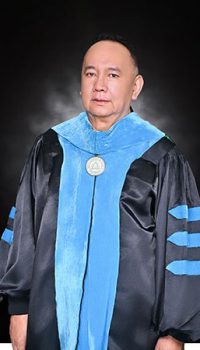
RICHARD D. DE LEON
Dean, College of Computer Science & Engineering

ENGR. SEAN LOPEZ
Program Director, College of Engineering and Computer Science
Program Recognition

ACSCU-ACI - LEVEL IV RE-ACCREDITED
Civil Engineering
About
Barely four months when the harrowing and nerve jittering World War II ended on August 15, 1945, The University of Manila formally opened the College of Engineering in December of the same year. Although fighting was still going on in some parts of Northern Luzon, Gen. McArthur announced on July 4, 1945 that “the entire Philippine Island is now liberated and the Philippine campaign can be regarded as virtually closed.” Those were the crucial years when the country was in the crossroads of indecision. All around was silence. The whole nation mourned. The Filipinos’ valiant spirit was the only engine which fueled their collective engines towards rehabilitation and rebuilding. The University of Manila, having this is mind placed itself in the forefront of nation building by training skilled citizens in the field of Engineering. The role of the technically trained men in a developing country like the Philippines is a major one, and in this stage of the nation’s industrialization efforts there is a great demand for them.
The College of Engineering offers degrees in Bachelor of Science in Industrial Engineering and Bachelor of Science in Civil Engineering.
Objectives
General Objectives:
The University of Manila College of Engineering is committed to the continuing empowerment of future Civil and Industrial professional engineers, who by their scientific, mathematical, technological and engineering expertise shall be in the forefront of nation building as they shall contribute their share to development both in the local and international scenes fully anchored in the UM trilogy of Ideals: “Love of Country (Patria)”, “Love of Science (Scientia)”, “Love of Virtue (Virtus)”.
Specific Objectives:
- To train prospective engineers who will not only be morally upright, but also honest and sincere and equally competent and efficient in their delivery of service to their constituents and clients.
- To develop civil and industrial engineers who are research-oriented and environmentally concerned, who will exercise leadership in the public and private sectors, as they will man various organizations involved in infrastructure projects and nation-building.
- To equip prospective engineers with the competencies, skills and values, as well as, the latest trends and developments in the field of engineering and other applied sciences.
- To produce would-be Civil and Industrial Engineers who are capable of designing and constructing quality infrastructure projects and who are capable of conducting topographic surveys in other related works.
Program Intended Learning Outcomes
Upon successful completion of the Bachelor of Science in Civil Engineering program, graduates shall be able to:
- Apply knowledge of mathematics, natural sciences, engineering sciences, and civil engineering principles to identify, formulate, analyze, and solve complex civil engineering problems.
- Design safe, sustainable, resilient, and cost-effective civil engineering systems and infrastructure such as buildings, bridges, highways, transportation systems, water resources, geotechnical works, and construction projects that meet technical, environmental, economic, legal, and societal requirements.
- Conduct engineering investigations and research by designing experiments, collecting and analyzing data, interpreting results, and utilizing evidence-based approaches to improve civil engineering practices.
- Utilize modern engineering tools, digital technologies, modeling and simulation software, Building Information Modeling (BIM), Geographic Information Systems (GIS), and other engineering applications appropriate to professional civil engineering practice.
- Apply engineering design, project planning, and construction management principles in the implementation, monitoring, evaluation, and maintenance of civil engineering projects while ensuring quality, safety, and regulatory compliance.
- Communicate effectively through engineering reports, technical drawings, design specifications, project proposals, presentations, and professional correspondence with clients, stakeholders, and multidisciplinary teams.
- Function effectively as a leader or member of multidisciplinary and multicultural teams by demonstrating professionalism, collaboration, leadership, project management, and interpersonal competence.
- Practice ethical, legal, and professional responsibility by adhering to engineering standards, the Civil Engineering Code of Ethics, occupational safety and health regulations, environmental laws, and principles of sustainable development.
- Evaluate the environmental, economic, social, cultural, and global impacts of civil engineering solutions and integrate disaster risk reduction, climate resilience, sustainability, and resource conservation into engineering practice.
- Apply engineering management and entrepreneurial principles in project planning, procurement, cost estimation, contract administration, quality assurance, risk management, and organizational leadership.
- Engage in lifelong learning, innovation, and continuous professional development by adapting to emerging technologies, advanced construction methods, smart infrastructure, research, and evolving professional standards.
- Exemplify patriotism, integrity, excellence, and public service by embodying the University of Manila’s ideals of Patria, Scientia et Virtus and contributing engineering knowledge and skills toward nation-building, infrastructure development, environmental stewardship, and the welfare of society.
Program Educational Objectives
- Professional Engineering Practice
Demonstrate competence in the planning, analysis, design, construction, operation, and maintenance of civil engineering projects by applying sound engineering principles, technical expertise, and modern technologies in accordance with national and international standards. - Ethical Leadership and Professional Responsibility
Practice the civil engineering profession with integrity, accountability, environmental stewardship, and social responsibility while upholding professional ethics, public safety, and the University of Manila’s ideals of Patria, Scientia et Virtus. - Innovation, Research, and Sustainable Development
Apply research, innovation, and evidence-based engineering solutions to address complex infrastructure challenges, promote sustainable development, enhance disaster resilience, and contribute to national and community development. - Leadership, Collaboration, and Project Management
Demonstrate effective leadership and collaboration in multidisciplinary teams by applying engineering management, communication, project planning, quality assurance, and entrepreneurial principles in the successful implementation of civil engineering projects. - Lifelong Learning and Global Competence
Pursue continuous professional development, advanced studies, professional licensure, and lifelong learning while adapting to emerging technologies, global engineering practices, and evolving industry standards to remain competitive in the civil engineering profession.
Attributes
BUILDERS
B – Builder of Sustainable Communities
U – Understanding of Engineering Principles
I – Innovative Problem Solver
L – Leadership-Oriented Professional
D – Dedicated to Quality and Safety
E – Ethical Practitioner
R – Resilient and Resourceful
S – Service-Driven Engineer
Graduate Attribute Statement:
BSCE graduates are BUILDERS who apply engineering knowledge, innovation, leadership, ethical responsibility, and resilience to develop sustainable infrastructure and improve the quality of life in society.
Career Opportunities
- Structural Engineer
- Construction Engineer
- Project Engineer
- Site Engineer
- Transportation Engineer
- Geotechnical Engineer
- Environmental Engineer
- Water Resources Engineer
- Quantity Surveyor
- Construction Manager
- Urban and Regional Planner
- Quality Control Engineer
- Safety Engineer
- CAD Designer/Drafter
- Consulting Engineer
- Government Engineer
- Research and Development Engineer
- Civil Engineering Instructor or Professor
Program Curriculum
Bachelor of Science in Civil Engineering
- First Year
- Second Year
- Third Year
- Fourth Year
Industrial Engineering
About
Barely four months when the harrowing and nerve jittering World War II ended on August 15, 1945, The University of Manila formally opened the College of Engineering in December of the same year. Although fighting was still going on in some parts of Northern Luzon, Gen. McArthur announced on July 4, 1945 that “the entire Philippine Island is now liberated and the Philippine campaign can be regarded as virtually closed.” Those were the crucial years when the country was in the crossroads of indecision. All around was silence. The whole nation mourned. The Filipinos’ valiant spirit was the only engine which fueled their collective engines towards rehabilitation and rebuilding. The University of Manila, having this is mind placed itself in the forefront of nation building by training skilled citizens in the field of Engineering. The role of the technically trained men in a developing country like the Philippines is a major one, and in this stage of the nation’s industrialization efforts there is a great demand for them.
The College of Engineering offers degrees in Bachelor of Science in Industrial Engineering and Bachelor of Science in Civil Engineering.
Objectives
General Objectives:
The University of Manila College of Engineering is committed to the continuing empowerment of future Civil and Industrial professional engineers, who by their scientific, mathematical, technological and engineering expertise shall be in the forefront of nation building as they shall contribute their share to development both in the local and international scenes fully anchored in the UM trilogy of Ideals: “Love of Country (Patria)”, “Love of Science (Scientia)”, “Love of Virtue (Virtus)”.
Specific Objectives:
- To train prospective engineers who will not only be morally upright, but also honest and sincere and equally competent and efficient in their delivery of service to their constituents and clients.
- To develop civil and industrial engineers who are research-oriented and environmentally concerned, who will exercise leadership in the public and private sectors, as they will man various organizations involved in infrastructure projects and nation-building.
- To equip prospective engineers with the competencies, skills and values, as well as, the latest trends and developments in the field of engineering and other applied sciences.
- To produce would-be Civil and Industrial Engineers who are capable of designing and constructing quality infrastructure projects and who are capable of conducting topographic surveys in other related works.
Program Intended Learning Outcomes
Upon successful completion of the Bachelor of Science in Industrial Engineering program, graduates shall be able to:
- Apply mathematics, natural sciences, engineering sciences, and industrial engineering principles to identify, analyze, and solve complex engineering and organizational problems.
- Design, improve, and optimize integrated systems involving people, materials, machines, information, energy, and financial resources to achieve productivity, quality, efficiency, safety, and sustainability.
- Design and conduct experiments, collect and analyze data, and interpret results using scientific, statistical, and engineering methods to support evidence-based decision-making and continuous improvement.
- Develop innovative engineering solutions by applying systems thinking, operations research, simulation, ergonomics, manufacturing systems, supply chain management, and quality engineering principles.
- Utilize modern engineering tools, /digital technologies, business analytics, automation, and information systems to improve operational performance and organizational competitiveness while recognizing their capabilities and limitations.
- Apply engineering management principles in project management, production planning and control, logistics, facilities planning, risk management, engineering economics, and strategic decision-making.
- Communicate effectively through technical reports, engineering documentation, presentations, data visualization, and professional correspondence with multidisciplinary teams, clients, and stakeholders.
- Function effectively as a leader or member of multidisciplinary and multicultural teams by demonstrating professionalism, collaboration, innovation, leadership, and sound project management practices.
- Demonstrate ethical, legal, and professional responsibility by adhering to engineering standards, occupational safety and health regulations, quality management systems, environmental sustainability principles, and the engineering code of ethics.
- Evaluate the economic, environmental, societal, and global impacts of industrial engineering solutions and promote sustainable development, responsible resource utilization, and organizational resilience.
- Engage in lifelong learning, research, innovation, and continuous professional development by adapting to emerging technologies, Industry 4.0 practices, artificial intelligence, smart manufacturing, and evolving industrial standards.
- Exemplify patriotism, excellence, integrity, and service by embodying the University of Manila’s ideals of Patria, Scientia et Virtus and applying industrial engineering knowledge to improve organizational performance, national productivity, and the quality of life of communities.
Program Educational Objectives
- Professional Engineering Competence
Demonstrate competence in the design, improvement, and management of integrated systems involving people, materials, information, equipment, energy, and financial resources by applying industrial engineering principles to enhance productivity, quality, efficiency, and organizational performance. - Ethical Leadership and Professional Responsibility
Practice the industrial engineering profession with integrity, accountability, professionalism, and respect for ethical, legal, environmental, occupational safety, and quality standards while exemplifying the University of Manila’s ideals of Patria, Scientia et Virtus. - Innovation, Research, and Sustainable Development
Apply research, innovation, systems thinking, and data-driven decision-making to develop sustainable engineering solutions that address operational challenges, improve organizational competitiveness, and contribute to national development. - Leadership, Collaboration, and Engineering Management
Demonstrate leadership and effective collaboration in multidisciplinary teams by applying engineering management, operations research, project management, quality engineering, supply chain management, and continuous improvement principles in diverse organizational settings. - Lifelong Learning and Global Competence
Pursue continuous professional development, lifelong learning, professional licensure, advanced studies, and industry certifications while adapting to emerging technologies, Industry 4.0, digital transformation, artificial intelligence, and global engineering practices.
Attributes
OPTIMAL
O – Outcome-Oriented
P – Problem Solver
T – Technology-Driven
I – Innovative
M – Methodical
A – Adaptive
L – Lifelong Learner
Graduate Attribute Statement:
BSIE graduates are OPTIMAL professionals who continuously improve systems, innovate processes, and adapt to changing organizational demands.
Career Opportunities
- Industrial Engineer
- Production Supervisor
- Operations Manager
- Quality Assurance Engineer
- Supply Chain Analyst
- Logistics Coordinator
- Process Improvement Specialist
- Manufacturing Engineer
- Project Manager
- Inventory Control Specialist
- Safety Engineer
- Systems Analyst
- Cost Analyst
- Facilities Planner
- Procurement Officer
- Data Analyst
- Business Process Consultant
- Industrial Engineering Instructor or Professor
Program Curriculum
Bachelor of Science in Industrial Engineering
- First Year
- Second Year
- Third Year
- Fourth Year
Barely four months when the harrowing and nerve jittering World War II ended on August 15, 1945, The University of Manila formally opened the College of Engineering in December of the same year. Although fighting was still going on in some parts of Northern Luzon, Gen. McArthur announced on July 4, 1945 that “the entire Philippine Island is now liberated and the Philippine campaign can be regarded as virtually closed.” Those were the crucial years when the country was in the crossroads of indecision. All around was silence. The whole nation mourned. The Filipinos’ valiant spirit was the only engine which fueled their collective engines towards rehabilitation and rebuilding. The University of Manila, having this is mind placed itself in the forefront of nation building by training skilled citizens in the field of Engineering. The role of the technically trained men in a developing country like the Philippines is a major one, and in this stage of the nation’s industrialization efforts there is a great demand for them.
The College of Engineering offers degrees in Bachelor of Science in Industrial Engineering and Bachelor of Science in Civil Engineering.
General Objectives:
The University of Manila College of Engineering is committed to the continuing empowerment of future Civil and Industrial professional engineers, who by their scientific, mathematical, technological and engineering expertise shall be in the forefront of nation building as they shall contribute their share to development both in the local and international scenes fully anchored in the UM trilogy of Ideals: “Love of Country (Patria)”, “Love of Science (Scientia)”, “Love of Virtue (Virtus)”.
Specific Objectives:
- To train prospective engineers who will not only be morally upright, but also honest and sincere and equally competent and efficient in their delivery of service to their constituents and clients.
- To develop civil and industrial engineers who are research-oriented and environmentally concerned, who will exercise leadership in the public and private sectors, as they will man various organizations involved in infrastructure projects and nation-building.
- To equip prospective engineers with the competencies, skills and values, as well as, the latest trends and developments in the field of engineering and other applied sciences.
- To produce would-be Civil and Industrial Engineers who are capable of designing and constructing quality infrastructure projects and who are capable of conducting topographic surveys in other related works.