College of Education
March 26, 2026 2026-08-04 9:55College of Education
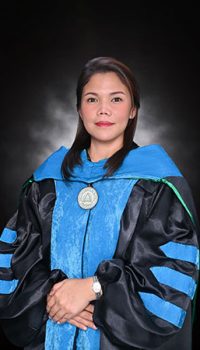
ESTHER DE LEON
Dean, College of Education
Program Recognition
PACUCOA – ACCREDITED LEVEL IV
About
The College of Education of The University of Manila was opened on July 1, 1923. It is dedicated particularly to the preparation of teachers to man the ever-growing network of schools and colleges all over the country; and to provide opportunities for professional growth and development for those who are already in the teaching field.
With the breakthrough developments in the education sector of the country and the increasing impact of knowledge society, the College is continuously studying and experimenting on new procedures leading to better teaching, learning, and living. Further, the College has fully implemented the Outcomes-Based Education (OBE) which is a student-centered fashion of delivering education to the students, making them life-long learners. Likewise, the College has recognized in its programs the 21st century skills expected of its graduates, thus, the latest technology is used extensively to better implement the teaching and learning procedures.
Faculty members are sent abroad to specialize in their chosen lines, and the faculty line-up is continuously strengthened by the addition of trained instructors versed in the newer techniques. University and community researches are being undertaken with the end view of integrating the activities of the university, its community, and the global arena.
In recognition of the quality standards and practices of the College of Education, the Philippine Association of Colleges and Universities-Commission on Accreditation or PACUCOA, a member of the Federation of Accrediting Agencies in the Philippines or FAAP, granted Level II Re accreditation status for its programs Bachelor of Elementary Education and Bachelor of Science in Secondary Education.
Objectives
General Objectives:
The University of Manila, College of Education, a teacher-training program, is committed to produce educator-mentors who are experts in their various fields of specialization directed towards excellence, competence, quality, productivity and relevance, whose personal lives are vivid reflections of the UM philosophy of Education within which they have been formed: ”Patria, Scientia et Virtus” (Love of Country, Love of Science and Love of Virtue).
Specific Objectives:
A. Bachelor in Secondary Education
- To produce Secondary teachers who by the testimony of their lives shall be living epitomes of the UM trilogy of ideals; “Patria” (love of country), “Scientia” (love of science) et “Virtus” (love of virtue); mentors who shall effectively play the role of the crisis intervenors and leaders in the many adolescent lives they will form;
- To instill in the persons of the would-be secondary educators a deep and clear understanding of the stages of human development; a thorough appreciation of the concepts of individual differences and the rich potentials of creative teaching and learning experiences of journeying with today’s adolescent learners.
- To produce Secondary teachers who are experts in their own chosen fields of specialization and in research, fully equipped with the latest teaching strategies and techniques; educators who are well-guided by the highest tenets of professionalism and ethical standards as they work towards empowering the youth.
B. Bachelor in Elementary Education
- To produce Elementary teachers who are imbued with the trilogy of UM ideals of love of country; love of science and love of virtue (Patria, Scientia, et Virtus); mentors who are ready to give the best of themselves to the mission and the apostolate of the empowering the youth of the nation.
- To provide teachers who are fully equipped with the latest trends in teaching strategies, competencies, skills and research; educators who are deeply steeped in the highest tenets of professionalism and ethical standards who shall lay the solid foundation of education of the pupils who will come under their care.
- To inculcate in the would-be teachers the exemplification of moral virtues such as integrity honesty, discipline, spirituality and social responsibility in imitation of Christ, the greatest teacher as they shall go about performing their roles as leader mentors of the young.
Program Intended Learning Outcomes
Upon successful completion of a teacher education program, graduates of the College of Education shall be able to:
- Demonstrate a comprehensive understanding of educational foundations by applying philosophical, historical, sociological, psychological, legal, and multicultural perspectives in teaching and learning.
- Demonstrate mastery of subject matter and pedagogy by designing, implementing, and evaluating learner-centered, inclusive, and outcomes-based instructional strategies appropriate to diverse learners.
- Develop and implement curriculum and instructional materials that are responsive to learners’ needs, aligned with national curriculum standards, and supportive of 21st-century learning competencies.
- Utilize assessment and evaluation strategies to measure, monitor, interpret, and improve student learning while providing timely and constructive feedback.
- Integrate information and communication technologies (ICT), digital learning tools, and emerging educational technologies to enhance teaching effectiveness, student engagement, and lifelong learning.
- Conduct educational research and classroom-based action research to address instructional challenges, improve educational practices, and contribute to the advancement of knowledge in education.
- Communicate effectively in English and Filipino through oral, written, and digital communication while demonstrating professionalism in academic and educational settings.
- Demonstrate leadership, collaboration, and interpersonal skills by working effectively with learners, parents, colleagues, administrators, and community stakeholders to promote quality education.
- Practice ethical, inclusive, and socially responsive teaching by upholding the values of integrity, respect, equity, diversity, environmental stewardship, and professional responsibility in accordance with the teaching profession’s ethical standards.
- Promote innovation, critical thinking, creativity, and problem-solving by creating meaningful learning experiences that prepare learners for lifelong learning and active citizenship.
- Engage in continuous professional development by pursuing lifelong learning, reflective practice, professional collaboration, and evidence-based teaching to improve instructional competence.
- Demonstrate commitment to nation-building and global citizenship by embodying the University of Manila’s ideals of Patria, Scientia et Virtus through quality teaching, community engagement, educational leadership, and service to society.
Program Educational Objectives
- Professional Excellence
Demonstrate competence and excellence in teaching by effectively applying content knowledge, pedagogical skills, assessment strategies, and educational technologies to facilitate meaningful learning in secondary education. - Ethical and Values-Oriented Practice
Practice the teaching profession with integrity, professionalism, compassion, and accountability while upholding the ethical standards of educators and exemplifying the University of Manila’s ideals of Patria, Scientia et Virtus. - Leadership and Community Engagement
Provide educational leadership by collaborating with schools, families, and communities in developing inclusive, learner-centered, and socially responsive educational programs that contribute to nation-building. - Research and Innovation
Engage in educational research, innovation, and reflective practice to improve teaching effectiveness, address educational challenges, and contribute to the advancement of the teaching profession. - Lifelong Learning and Global Competence
Pursue continuous professional development, lifelong learning, and global engagement by adapting to emerging educational trends, technological advancements, and diverse learning environments while maintaining competence as professional educators.
Attributes
Career Opportunities
- Elementary Teacher
- Secondary/High School Teacher
- College Instructor
- Special Education (SPED) Teacher
- Preschool or Early Childhood Teacher
- Guidance Associate or Counselor Assistant
- School Administrator
- Curriculum Developer
- Educational Researcher
- Trainer or Facilitator
- Academic Coordinator
- Online Tutor or ESL Teacher
- Library or Learning Resource Staff
- Instructional Materials Writer
- Education Program Specialist
- Corporate Trainer
- Community Educator
- Review Center Instructor
Program Curriculum
Bachelor of Elementary Education
- First Year
- Second Year
- Third Year
- Fourth Year
Bachelor of Secondary Education Major in Social Studies
- First Year
- Second Year
- Third Year
- Fourth Year
Bachelor of Secondary Education Major in Physical Science
- First Year
- Second Year
- Third Year
- Fourth Year
Bachelor of Secondary Education Major in Mathematics
- First Year
- Second Year
- Third Year
- Fourth Year
Bachelor of Secondary Education Major in Guidance and Counseling
- First Year
- Second Year
- Third Year
- Fourth Year
Bachelor of Secondary Education Major in Guidance and Counseling
- First Year
- Second Year
- Third Year
- Fourth Year
Bachelor of Secondary Education Major in English
- First Year
- Second Year
- Third Year
- Fourth Year
Bachelor of Secondary Education Major in Computer Education
- First Year
- Second Year
- Third Year
- Fourth Year
The College of Education of The University of Manila was opened on July 1, 1923. It is dedicated particularly to the preparation of teachers to man the ever-growing network of schools and colleges all over the country; and to provide opportunities for professional growth and development for those who are already in the teaching field.
With the breakthrough developments in the education sector of the country and the increasing impact of knowledge society, the College is continuously studying and experimenting on new procedures leading to better teaching, learning, and living. Further, the College has fully implemented the Outcomes-Based Education (OBE) which is a student-centered fashion of delivering education to the students, making them life-long learners. Likewise, the College has recognized in its programs the 21st century skills expected of its graduates, thus, the latest technology is used extensively to better implement the teaching and learning procedures.
Faculty members are sent abroad to specialize in their chosen lines, and the faculty line-up is continuously strengthened by the addition of trained instructors versed in the newer techniques. University and community researches are being undertaken with the end view of integrating the activities of the university, its community, and the global arena.
In recognition of the quality standards and practices of the College of Education, the Philippine Association of Colleges and Universities-Commission on Accreditation or PACUCOA, a member of the Federation of Accrediting Agencies in the Philippines or FAAP, granted Level II Re accreditation status for its programs Bachelor of Elementary Education and Bachelor of Science in Secondary Education.
General Objectives:
The University of Manila, College of Education, a teacher-training program, is committed to produce educator-mentors who are experts in their various fields of specialization directed towards excellence, competence, quality, productivity and relevance, whose personal lives are vivid reflections of the UM philosophy of Education within which they have been formed: ”Patria, Scientia et Virtus” (Love of Country, Love of Science and Love of Virtue).
Specific Objectives:
A. Bachelor in Secondary Education
- To produce Secondary teachers who by the testimony of their lives shall be living epitomes of the UM trilogy of ideals; “Patria” (love of country), “Scientia” (love of science) et “Virtus” (love of virtue); mentors who shall effectively play the role of the crisis intervenors and leaders in the many adolescent lives they will form;
- To instill in the persons of the would-be secondary educators a deep and clear understanding of the stages of human development; a thorough appreciation of the concepts of individual differences and the rich potentials of creative teaching and learning experiences of journeying with today’s adolescent learners.
- To produce Secondary teachers who are experts in their own chosen fields of specialization and in research, fully equipped with the latest teaching strategies and techniques; educators who are well-guided by the highest tenets of professionalism and ethical standards as they work towards empowering the youth.
B. Bachelor in Elementary Education
- To produce Elementary teachers who are imbued with the trilogy of UM ideals of love of country; love of science and love of virtue (Patria, Scientia, et Virtus); mentors who are ready to give the best of themselves to the mission and the apostolate of the empowering the youth of the nation.
- To provide teachers who are fully equipped with the latest trends in teaching strategies, competencies, skills and research; educators who are deeply steeped in the highest tenets of professionalism and ethical standards who shall lay the solid foundation of education of the pupils who will come under their care.
- To inculcate in the would-be teachers the exemplification of moral virtues such as integrity honesty, discipline, spirituality and social responsibility in imitation of Christ, the greatest teacher as they shall go about performing their roles as leader mentors of the young.
Bachelor of Secondary Education
Major in:
- English
- Filipino
- Mathematics
- Physical Science
- Guidance and Counseling
- Computer Education
- Social Studies