
College of Criminology
March 26, 2026 2026-08-03 8:06College of Criminology
MARIO ANGELO E. PAQUIDAO
Dean, College of Criminology
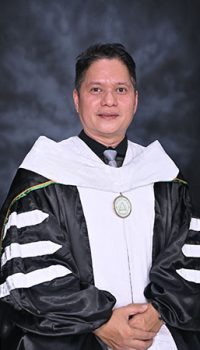
ANTHONY A. MONDEJAR
Assistant Dean, College of Criminology | Director for Discipline
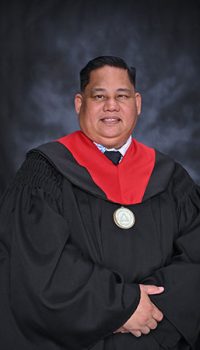
PROF. PAUL B. LEVISTE
Program Director, College of Criminology
Program Recognition

ACSCU-ACI - LEVEL IV RE-ACCREDITED
About
The College of Criminology of the University of Manila was opened on July 1, 1963, is one of the most populous colleges of this University. Its four-year curriculum is patterned after the leading curricula of the leading colleges and universities in the United States and Europe offering criminal justice and public safety. However, it is modified to suit the standards of law enforcement agencies in the Philippines.
As society continues to grow, so does the need for this career and the understanding of how and why such behavior occurs. The B.S. Criminology program stresses an interdisciplinary study of criminal justice in the Philippines. Those interested in careers in criminal justice, crime prevention, child behavioral problems, adolescent delinquency or effective intervention will find this degree extremely valuable.
In recognition of the quality standards and practices of the College, the Association of Christian Schools, Colleges, and Universities or ACSCU-AAI, a member of the Federation of Accrediting Agencies in the Philippines or FAAP, conferred Level I Formal Accreditation status to the B.S. Criminology program of the College.
Objectives
General Objectives:
The University of Manila College of Criminology commits itself to the empowerment of men and women who are morally and physically fit and are desirous to dedicate themselves to the profession of law enforcement, criminal investigation, scientific crime detection and detective service work. It further aims to produce professionals and leaders who will not only maintain the peace and order situation of the respective communities they will serve, but who will at all times manifest Love of Country (Patria), Love of Science (Scientia) and Love of Virtue (Virtus) in the various crucial roles they will play in making their fellow Filipinos live a peaceful and productive community life.
Specific Objectives:
- To maintain an adequate system of education in the field of law enforcement work, research, scientific crime detection and progressive system of correction and rehabilitation of offenders of the law;
- To provide sufficiently trained personnel who will manage and lead the growing network of law enforcement and peace and order agencies, public and private investigation agencies, security forces, correctional and penal institutions;
- To equip young men and women who are committed to render service for the rehabilitation of social offenders with the necessary principles, psychosocial-spiritual and human growth and development and to enable them to effectively and efficiently perform their roles as crisis intervenors.
Program Intended Learning Outcomes
Upon successful completion of the Bachelor of Science in Criminology program, graduates shall be able to:
- Demonstrate comprehensive knowledge of criminology and criminal justice by applying theories, principles, and practices in crime prevention, law enforcement, criminal investigation, forensic science, corrections, and public safety.
- Conduct criminological and interdisciplinary research using appropriate qualitative and quantitative research methods to analyze crime trends, criminal behavior, victimization, and evidence-based approaches to crime prevention and criminal justice.
- Apply criminal law, evidence, criminal procedure, and relevant special laws in the investigation, prevention, detection, and resolution of crimes while observing due process and the rule of law.
- Utilize criminalistics and forensic science techniques in crime scene processing, evidence collection, preservation, laboratory examination, and forensic analysis in accordance with legal and professional standards.
- Promote public safety, crime prevention, and community security by designing, implementing, and evaluating programs that strengthen community engagement, disaster preparedness, and crime reduction initiatives.
- Demonstrate ethical leadership, professionalism, and respect for human rights by upholding integrity, accountability, social justice, gender sensitivity, and victim welfare in all areas of criminal justice practice.
- Apply digital technologies and modern investigative tools including crime mapping, information systems, cybercrime awareness, digital evidence management, and data analytics to enhance criminal justice operations.
- Communicate effectively through oral, written, and digital communication in English and Filipino while preparing professional reports, investigative documents, legal records, and research outputs.
- Collaborate effectively with multidisciplinary and multicultural teams by demonstrating leadership, teamwork, conflict resolution, and effective coordination with law enforcement agencies, courts, correctional institutions, local government units, and community organizations.
- Develop and implement correctional, rehabilitation, and restorative justice programs that support offender reintegration, victim assistance, and community-based crime prevention while promoting public trust and social responsibility.
- Engage in lifelong learning, innovation, and continuous professional development by adapting to emerging technologies, evolving legal frameworks, international standards, and contemporary issues in criminology and criminal justice.
- Exemplify patriotism and responsible citizenship by embodying the University of Manila’s ideals of Patria, Scientia et Virtus through competent, ethical, and compassionate service that contributes to peace, justice, public safety, and national development.
Program Educational Objectives
- Professional Competence
Demonstrate competence and professionalism in the practice of criminology by applying knowledge and skills in law enforcement, criminal investigation, forensic science, crime prevention, public safety, corrections, and criminal justice administration in accordance with national and international standards. - Ethical Leadership and Public Service
Exhibit integrity, accountability, respect for human rights, and ethical leadership while providing responsive, impartial, and community-oriented service consistent with the University of Manila’s ideals of Patria, Scientia et Virtus. - Research, Innovation, and Problem Solving
Conduct and utilize criminological research, data analytics, and evidence-based practices to address crime, improve criminal justice operations, and contribute to public safety, policy development, and community well-being. - Community Engagement and Nation-Building
Collaborate effectively with government agencies, law enforcement organizations, private institutions, and local communities in promoting crime prevention, restorative justice, peace and order, disaster resilience, and sustainable community development. - Lifelong Learning and Career Advancement
Pursue continuous professional development, lifelong learning, advanced studies, and relevant professional certifications while adapting to emerging technologies, legal developments, and innovations in criminology and criminal justice.
Attributes
Outstanding Attributes of Criminology Graduates
Graduates of the University of Manila’s College of Criminology are prepared to serve with honor, discipline, and a strong commitment to justice. Trained to uphold the law and protect communities, they embody the values of public trust, ethical leadership, and global awareness in law enforcement and allied fields. As ENFORCERS, they stand as symbols of integrity, courage, and professionalism—ready to lead in local and international arenas of peacekeeping, investigation, and criminal justice.
E – Ethical: Upholds integrity, fairness, and strong moral principles in every action and decision.
N – Noble: Guided by a deep sense of duty, honor, and public service in maintaining peace and order.
F – Firm: Demonstrates strength and decisiveness in enforcing the law while respecting human rights.
O – Observant: Highly perceptive and attentive to detail, essential for investigations and public safety.
R – Resilient: Stays strong and composed under pressure, able to handle high-stress and critical situations.
C – Competent: Well-trained and knowledgeable in criminological theories, procedures, and practical applications.
E – Empowered: Prepared to take initiative and make informed decisions in pursuit of justice and security.
R – Responsible: Accountable for actions, decisions, and the trust placed in them by society.
S – Strategic: Applies tactical and analytical thinking in solving crimes, managing risks, and planning operations.
Career Opportunities
- Police Officer
- Criminal Investigator/Detective
- Correctional Officer
- Probation or Parole Officer
- Forensic Investigator
- Crime Laboratory Technician
- Security Officer/Manager
- Fire Officer
- Jail Officer
- Border or Immigration Officer
- Customs Officer
- Private Investigator
- Intelligence Officer
- Traffic Enforcement Officer
- Cybercrime Investigator
- Loss Prevention Officer
- Criminology Instructor
- Public Safety Officer
Program Curriculum
Bachelor of Science in Criminology
- First Year
- Second Year
- Third Year
- Fourth Year
The College of Criminology of the University of Manila was opened on July 1, 1963, is one of the most populous colleges of this University. Its four-year curriculum is patterned after the leading curricula of the leading colleges and universities in the United States and Europe offering criminal justice and public safety. However, it is modified to suit the standards of law enforcement agencies in the Philippines.
As society continues to grow, so does the need for this career and the understanding of how and why such behavior occurs. The B.S. Criminology program stresses an interdisciplinary study of criminal justice in the Philippines. Those interested in careers in criminal justice, crime prevention, child behavioral problems, adolescent delinquency or effective intervention will find this degree extremely valuable.
In recognition of the quality standards and practices of the College, the Association of Christian Schools, Colleges, and Universities or ACSCU-AAI, a member of the Federation of Accrediting Agencies in the Philippines or FAAP, conferred Level I Formal Accreditation status to the B.S. Criminology program of the College.
General Objectives:
The University of Manila College of Criminology commits itself to the empowerment of men and women who are morally and physically fit and are desirous to dedicate themselves to the profession of law enforcement, criminal investigation, scientific crime detection and detective service work. It further aims to produce professionals and leaders who will not only maintain the peace and order situation of the respective communities they will serve, but who will at all times manifest Love of Country (Patria), Love of Science (Scientia) and Love of Virtue (Virtus) in the various crucial roles they will play in making their fellow Filipinos live a peaceful and productive community life.
Specific Objectives:
- To maintain an adequate system of education in the field of law enforcement work, research, scientific crime detection and progressive system of correction and rehabilitation of offenders of the law;
- To provide sufficiently trained personnel who will manage and lead the growing network of law enforcement and peace and order agencies, public and private investigation agencies, security forces, correctional and penal institutions;
- To equip young men and women who are committed to render service for the rehabilitation of social offenders with the necessary principles, psychosocial-spiritual and human growth and development and to enable them to effectively and efficiently perform their roles as crisis intervenors.