
Community Development
June 10, 2026 2026-06-22 8:05Community Development
Community Extension Services and Development (CESDEV) Program
Vision
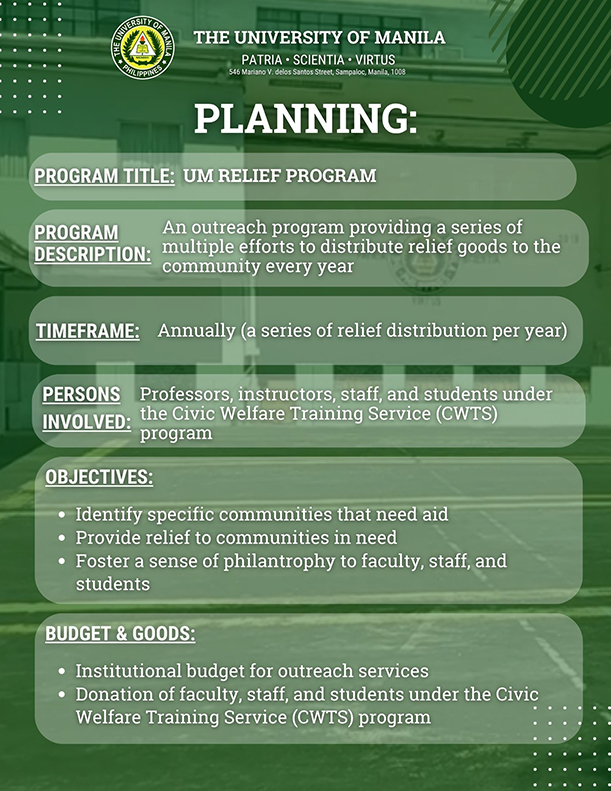
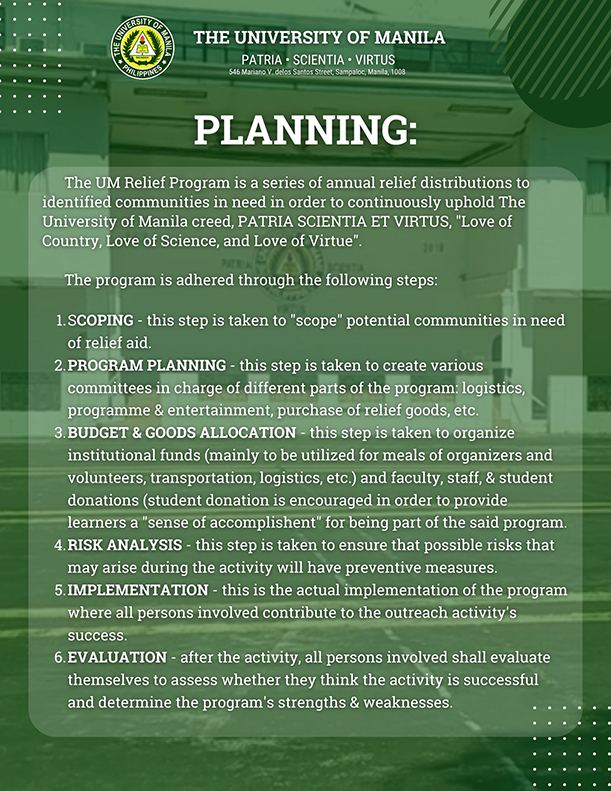
The Community Extension Services and Development (CESDEV) Program of The University of Manila is a dynamic, facilitative and integrative program that assists the community residents, especially those in depressed areas in the country to become responsible, pro-active and self-reliant.
Mission
To effect an environment supportive of the development of socially aware and responsible, self-reliant Filipinos.
Objective
- To promote the spirit of volunteerism among the University administrators, staff and students in extending help to the needy through various administrators, staff and students in extending help to the needy through various service programs and projects.
- To mobilize different campus organizations and encourage them to participate in community service activities.
- To attain excellence in community service by:
- Cultivating values and culture toward attaining improved quality of life;
- Playing a major role in the making of important and relevant policies; and
- Conducting outreach programs on literacy and occupational skills for various sectors in the service area.
Benefits of Outreach and Engagement
- Increases public understanding and support for an issue
- Local decisions reflect the interest of the community
- Allows different perspective to be represented
- Builds accountability and trust
- Identifies shared community concers, interest and goals
- Creates strong, healthy, vibrant places to live, work, leam and plan.
- Allows for creative problem-solving
- Increases social capital
- Develops new community leaders
- Helps in the discovery of community assets, skills, and resources
Preparing Students for Service-Learning Projects
For many students, this will be their opportunity to work off-campus in a community that is different from their own. Your service-learning course will be a new experience that challenges their concepts of college courses and the world. It is important to prepare them by providing a thorough overview of the service-learning experience. Similarly, it is important to prepare more experienced students to participate in service-learning in a new context.
When applying the Three Phase Development Model to a specific course, you can think of preparation as exposure and capacity building phases that enable students to take on greater independent responsibility in completing the service-learning project.
Recommended strategies for preparing students for service-learning include:
- Provide a thorough overview of the service-learning course component in the syllabus. Outline the rationale for service-learning projects, the weight for the service-learning project on final grades, and the course structure to help students prepare for what is expected of them throughout of the semester.
- Set achievably high expectations for your students and communicate these expectations to them. For example, provide students with a copy of the Student Responsibilities in UM and tell your students that you want them to make such a positive impression that the community partner will want to work with the next round of students in your class! Let students know that there have been cases of UM students who have developed such a good reputation in the community through service-learning that they have received letters of recommendation, invited to stay on through internships, and even offered full-time, permanent jobs with their service-learning community partner as a result.
- Invite the community partner to class to explain their organization’s mission and vision statements, role in the community, nature of the service-learning project, and the expectations that they have for students.
- Arrange an orientation or tour of the community partner site to familiarize students with the working environment and provide opportunities to ask questions and meet community members.
- Provide students for working with people from different communities, populations, backgrounds, and cultures. This can be done through cultural competency awareness training that is integrated into the course and designed to prepare students to work well with people from different communities during the service-learning experience.
Reflection exercises help students to:
- See connections between course learning objectives and civic engagement activities.
- Examine past beliefs and newfound ways of understanding the world.
- Have structured opportunities to synthesize and derive new meaning from their experiences.
- Think more deeply about the social justice and broader-sphere implications of course topics and applications
- Reflect upon the student’s own learning process.
The 4 C’s of Reflection
- Continuous: reflection activities are encouraged throughout the semester in a variety of formats
- Connected: reflection activities should refer directly to each student’s service-learning project. Because students will likely be working in different service-learning projects, faculty members should be prepared for variety in the content of the reflection activities.
- Challenging: reflection activities should challenge students to think critically about their service-learning activities and how they relate to their roles as engaged citizens and to academic course content. Faculty members should set high expectations and provide engaging feedback for students.
- Contextualized: reflection activities should be consistent and complementary to other course content.
Community Development Activities
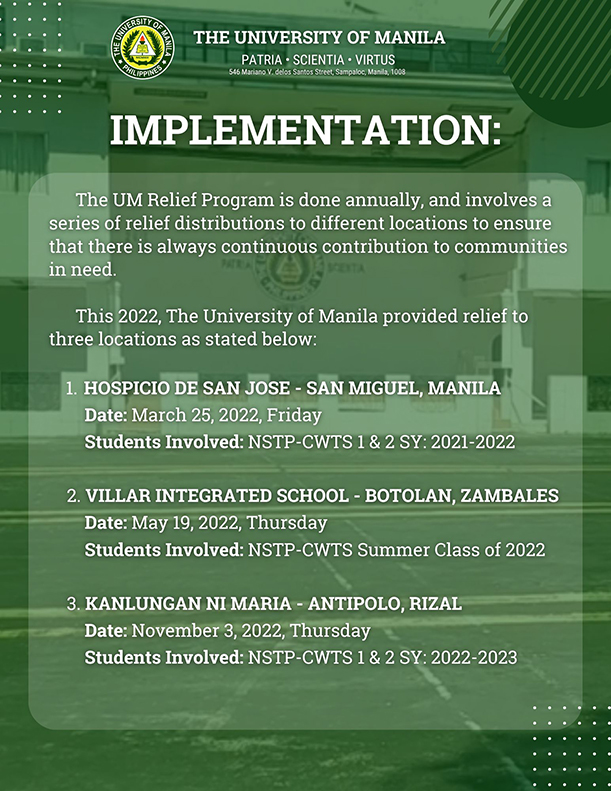
COMMUNITY OUTREACH PROGRAM IN VILLAR INTEGRATED SCHOOL IN BOTOLAN, ZAMBALES
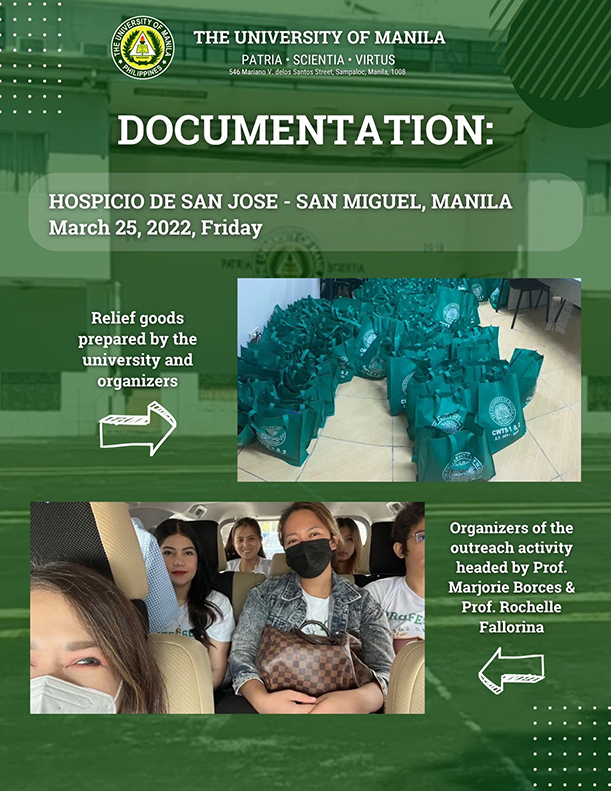
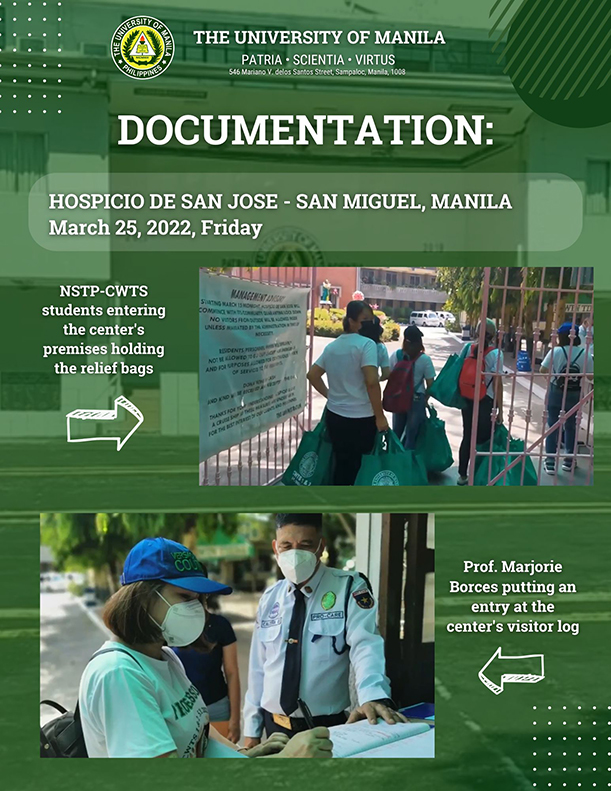
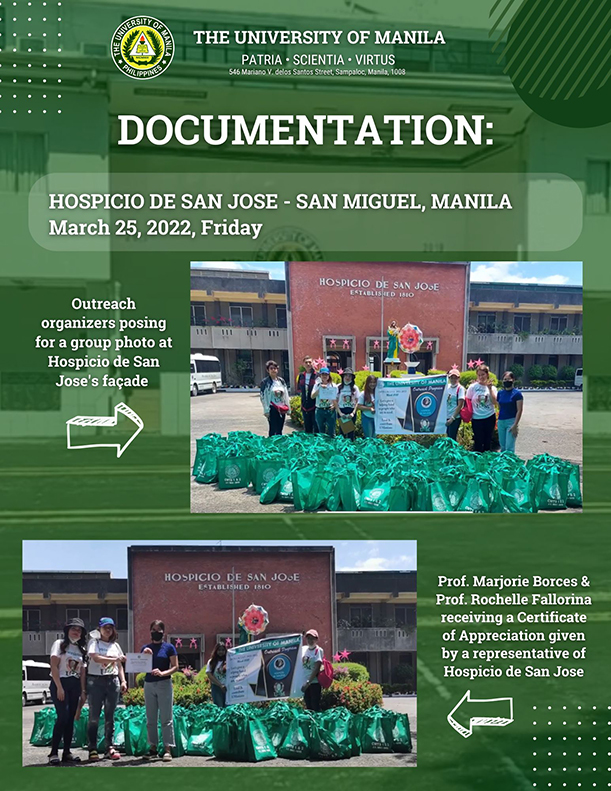
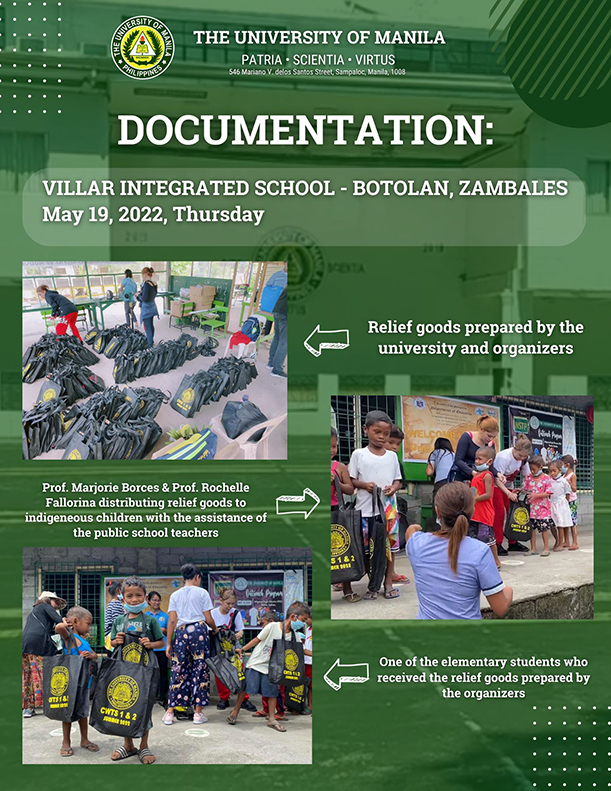
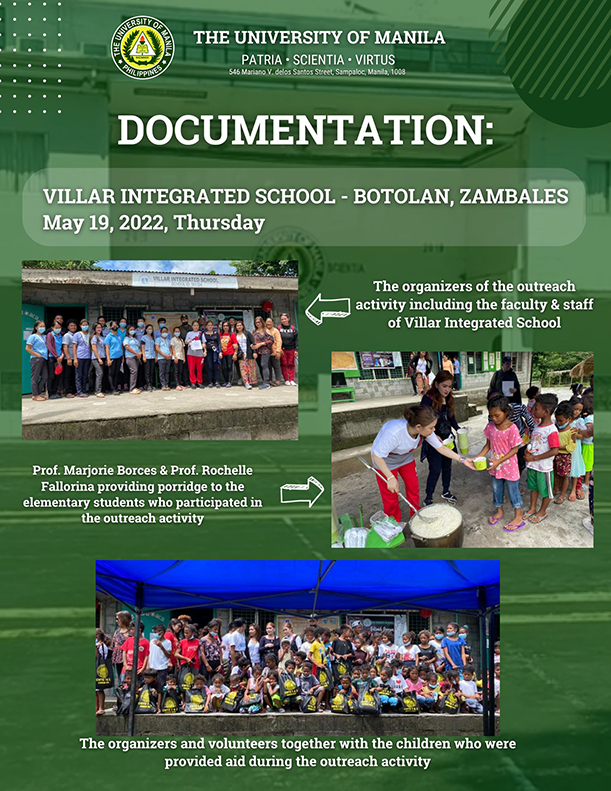
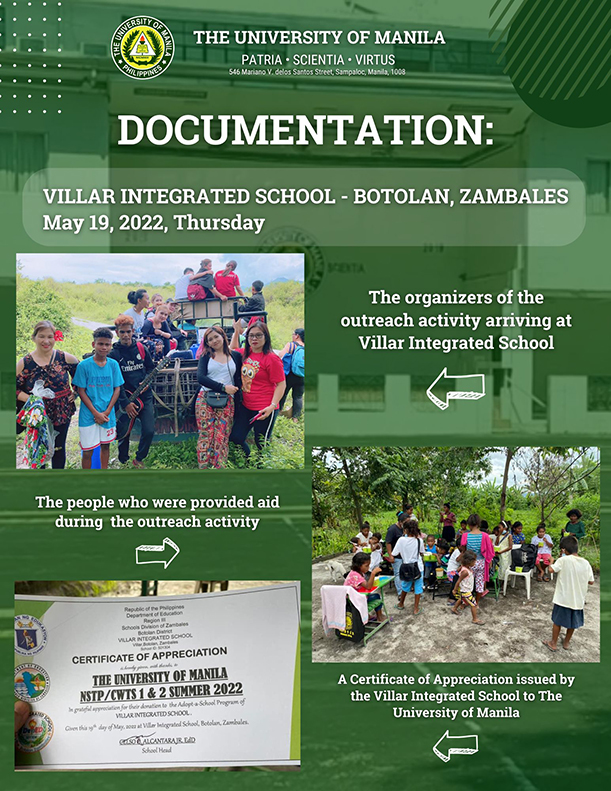
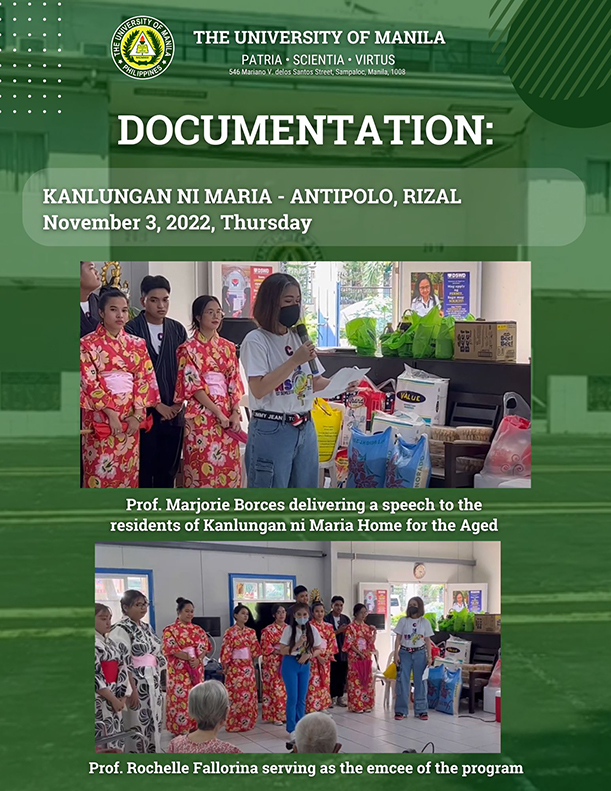
The group from the University of Manila led by Prof. Marjorie D. Borces, the CESDEV Program Coordinator conducted a community outreach program to the Villar Integrated School at Botolan, Zambales. The activities included the feeding program, classroom teaching on functional literacy, donations of school supplies and gifts.

PROF. MARJORIE BORCES
Director, CESDEV Program